Currently Visitors20182726






- Geography Location
- Develop History
- Natural Resources & Cultural Resources
- Four Seasons in Pingsi
- Mining Culture
- Indigo Dye Crafts
- Pingsi Commercial District Association
Develop History
Pingsi was formerly a farming-based mountain village, and its people mainly gathered crops of Chinese yams and tea as well as camphor trees and yams in the wild. In 1907, an open coal mine was discovered, which became to yield more than 400,000 tons in production of what was known as “Taiwan coal” every year and marked the beginning of the Black Gold Age in Pingsi. Suddenly, this quiet little town in the mountains became the center of a coal rush.
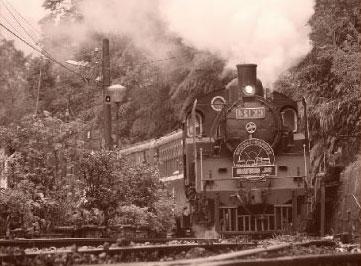
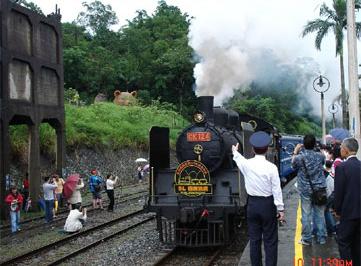
In order to transport coal, the Taiyang Mining Company funded the construction of the Pingsi Line railway in 1918. The line brought nearly a century of industrial growth and dramatically influenced the lifestyle of the local residents as well as the overall environment. At the height of the coal mining industry, the Pingsi Line never saw a moment of quiet, with tens of thousands of coal diggers coming and going. Trains roared by to deliver coal, and streets bustled to accommodate the miners as well as the fast-increasing population inflow. The drop in production at the mines combined with multiple disasters over a decade prior saw the mines begin turning off their lights, and so did Pingsi. However, the railway did not fade, and, on the contrary, reinvented itself as a subject of nostalgia in the Black Gold Age in Pingsi, along with the miners who labored tirelessly in the dark.
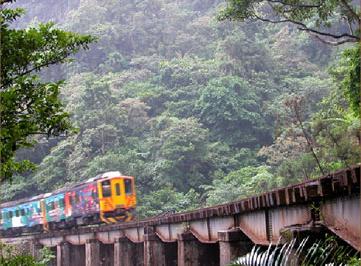
In April of 1992, the Pingsi Line was designated a “scenery line” by Taiwan Railway. A stretch of 13 kilometers of railway beginning at Sandiaoling Station, and making six stops along the line at Dahua, Shihfen, Wanggu, Lingjiao, Pingsi, and Jingtong. The line crosses land filled with natural beauties as well as overhead iron bridges and pitch-black tunnels. It also passes village houses and many rooftops. The fortunes of the abandoned coal mines turned, and they have become a unique tourist attraction.
Moreover, the famous Pingsi Sky Lanterns Festival is another cultural attraction in northern Taiwan. It dazzled an international audience during the Millennium Celebrations and showcased Pingsi as “Home of the Sky Lanterns”.